Showing posts with label Long Book Challenge. Show all posts

Saturday, November 27, 2010

Third read for an eschewer of re-reads


I'm pretty sure this book does not need any synopsis; by this point it is probably one of the most recognized books in the world! I am an eschewer of re-reads, there are just too many books out there to spend time reading the same one again; however, there is something about the Harry Potter series that I just can't resist - this is my THIRD time reading them!

Each time I pick them up, I am transported back to Hogwarts with Harry, Ron, and Hermione to battle evil and safe the wizarding world. I LOVE these books....

Harry Potter and the Sorcerer's Stone (Year 1)

Harry Potter and the Chamber of Secrets (Year 2)

Harry Potter and the Prisoner of Azkaban (Year 3)

Harry Potter and the Goblet of Fire (Year 4)

Harry Potter and the Order of the Phoenix (Year 5)

Harry Potter and the Half-Blood Prince (Year 6)

Harry Potter and the Deathly Hallows (Year 7)


Selfish altruism makes for a horrible second book

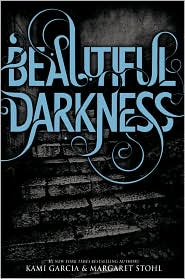
Beautiful Darkness (Caster Chronicles #2)
Kami Garcia and Margaret Stohl

What is it about the second installment of YA paranormal romance books that just irritates the crap out of me? Oh yeah, the completely selfish altruism* that stems from an immature lack of communication.

Lena Duchannes and Ethan Wate survived Lena's sixteen birthday - the day where she must decide if she will be a Light Caster or a Dark Caster, and suffer the consequences of either decision. But, Lena has never been normal and a twist of fate/repeat of the past leaves the Order of Things in the balance. While Lena struggles to come to terms with her decisions and fights to decide who she really is, Ethan becomes more entrenched in the Caster World and learns that life is never what it seems and those you love never really leave.

I love the premise of this series - Light v. Dark, Caster v. Mortal, Love v. Loss. I think the authors do a fabulous job of weaving together the two concurrent worlds with characters that you can't help but love (or hate). Yeah, there are parts of the story that tend to be a little too coincidental but I've come to expect a bit of that with YA books and I have come to tolerate a low level amazing coincidences.

What I have not come to tolerate is this sudden theme of Book 2 in YA series of one half of the couple completely abandoning the other because they believe they are protecting their boy/girlfriend. When has leaving without an explanation and cutting someone completely out of your life ever been the correct way to solve a problem or extract yourself from a difficult situation?! And, in addition, why does the abandonee always fall into a state of serious depression that consumes their life?!

The "I can't live without you" theme probably wasn't as bad as I am making it out to be but the negative associations with the same, gender-reversed theme in New Moon of the Twilight Saga had me taking deep breaths to calm myself down and taking notes to prevent my future daughter/son from thinking this way. (Seriously, amazing parallels between Ethan and Bella - SO leaves to protect them, friend/potential new SO is there to console, heartbroken Ethan/Bella braves all to save the life of the one who abandoned them, forgiveness given without any discussion about it).

Overall, a solid and entertaining addition to the Caster Chronicles but I am glad to be through this book and have full faith that the third installment will be much better and less teen-angst-y

*Yes, I realize that "selfish altruism" is conflicting...did it on purpose.

Formulaic but it works for Morton!

The Distant Hours
Kate Morton

Morton's books have a definite plot structure - family secrets that are slowly unveiled through interwoven stories from multiple points of view of the past and present - but it works for her!

Edie Burchill is an only child; she loves her parents but isn't particularly close to them even though she longs to know more about them as individuals. When her mother receives a letter that was caught up in the postal service for fifty years, Edie gets a glimpse of a side of her mother that she has never seen before and is eager to learn more.

The letter, combined with some serendipitous events, leads Edie on a path to discover the events during World War II that caused her mother to be evacuated to a country estate under the care of the eccentric Blythe sisters, the true story behind the classic children's novel The Mud Man, and the dark secrets that they Blythe family continues to hide a half century and more after their occurrence.

Morton has a wonderful way with words, she paints such a vivid picture of the characters and surroundings that I am instantly transported into her world. She is descriptive without be clinical or flowery - and I think that is a hard balance to strike. However, her plots are wonderfully circuitous but fairly easy to figure out; I read for the journey of getting to the end and not for the surprise revelation that is waiting. Even so, there are some minor twists and turns that add to the enjoyment of reading even if they don't spur you on to the next.

If you are a fan of Morton - as I am - then this book will not be a let down! If you are new to Morton, any of her books are a wonderful introduction to her body of work that is small as of yet but highly enjoyable....just don't read them all back-to-back!

Tuesday, November 2, 2010

Oprah finally got it right

Freedom
Jonathan Franzen

Freedom had a lot of things working against it before I picked it up: it got rave critical reviews (pretentious middle-aged men and I typically don't have similar reading tastes), mixed popular reviews (mixed reviews can actually be a plus because then you at least know people are being honest), and then Oprah picked it as her newest book club pick (I love Oprah but, let's be honest, she doesn't have great taste in book selections). However, I was still intrigued and decided to give this one a try....and am glad I did.

Patty and Walter Berglund are a happily married couple living in the suburbs of Minnesota. Walter is a nature-lover who always thought he would do activist work, but gladly works at a corporate job so that Patty can stay home with their kids, Jessica and Joey. As the kids get older and Patty and Walter begin to grow apart, their life stories are told through a combination of flashbacks and current stories, with different parts of the story being told from different parts of view. The theme running through the book is the idea of freedom: what each persons idea of freedom is and what happens when they actual gain the freedom they always thought they wanted.

I think Freedom is best described by what it is not; this book is not:
· a plot driven novel - it is very character driven and while there is a storyline, the common thread is just the life of a family and the peripheral events that shape their lives together.
· a feel-good story - it definitely leans more toward a realistic view of a slightly dysfunctional family...the family isn't horribly dysfunctional, just the parents gradually grow apart, the son becomes rebellious, and the daughter feels like she has to be perfect.
· full of lovable characters - in fact, most of the characters were not likable at all. They were selfish, mentally unstable, and made unforgivable mistakes; but instead of making me hate the book, the characters kept pulling me back in to see what would happen next and if the family would make it through the next challenge.
· Freedom also had subtle social, environmental, and political commentaries (sometimes not so subtle) that I thought added greatly to the overall story by bringing a bit of the outside world into what otherwise would have been an isolated family story.

While I greatly enjoyed Freedom and had trouble putting it down, many people will probably read this review and be even more convinced to stay away from this book! But, sometimes the best and most influential books end up being the most polarizing...and I ended up on the positive side.

Thursday, October 7, 2010

Middlesex is the blending of family saga and personal discovery

Middlesex
Jeffrey Eugenides

I pushed this book aside for many years because I wasn't sure I wanted to read a book about a hermaphrodite; I don't know that much about hermaphrodite-ism (is that a word?) and have to honestly admit that I was being judgmental and discriminatory in my original view. Huh, funny how ignorance of a topic brings those qualities out. After so many glowing reviews, I finally decided it was time to read it. Even though this book was a work of fiction, it was extremely eye-opening for me.

The story of Caliope - who changes gender identity to Cal in his teenage years - is a first person narrative that starts with his grandparents in Greece, chronicles their life together as they move to America, switches to narrative about Cal's parents, and finally about Cal himself. More accurately, it chronicles the journey of two recessive versions of 5-Alpha-Reductase on chromosome 5 through three generations of Cal's family until they, unfortunately, come together in his body, making him a male pseudo-hermaphrodite.

What I reflected on most while reading this book was that it could have been a story about anyone, hermaphrodite or not. At it's core, it was a story about an individual who was trying to survive his teenage years, struggling with gender identity and sexuality, and just trying to blend in with the crowd - all themes with which each of us can identify. A theme that was woven throughout the book was that a person's biological sex does not necessarily determine their gender identity, which is an idea I have often discussed, but never thought of in this context.

I also had no idea the many types of hermaphrodite-ism! It is not simply the case of having a vagina and a penis simultaneously, but is a complex (im)balance of hormones and the timing of when those hormones are (or are not) triggered in your body. Which quickly led me to the final lesson I learned from this book: do not simply google "hermaphrodite" in hopes of getting scientific information on the subject. Or, if you do, you should definitely not do it from work! I got a plethora of information, most of it unwanted, that led me to close my browser in record-breaking time! I them carefully navigated to a medicinal science website before conduction that search again!

Overall, a great book and amazing story that gets that extra bump up to 5 stars by changing my view of the world and making me more open to people who are different than me. Ah, I love books that have that effect.

Thursday, September 23, 2010

How far would you go to uncover the biggest discovery in the history of mankind?

The Ice Limit
Douglas Preston & Lincoln Child

How far would you go to uncover the scientific discovery of the century? Perhaps the biggest discovery in the history of mankind?

Sam McFarlane is a renegade scientist - he finds and studies meteorites but refuses to conform to the typical research realm of academia and instead travels the world looking for evidence to support his theory of an interstellar meteorite. He has recently lost face with the scientific community, lost his research partner and best friend, and his marriage ended in divorce. When Palmer Lloyd, the seventh richest man in the world, asks McFarlane to be the chief scientist on an expedition to retrieve a previously undiscovered meteorite in extreme South America - the largest meteorite ever discovered - McFarlane reluctantly agrees. Under the cloak of secrecy, a team of engineering and scientific experts set off on the most dangerous trip of their lives; a trip that leads them to The Ice Limit.

The Ice Limit was action-packed and full of great nerdy science facts, intermixed science fact and fiction, brought in a bit of engineering foresight....and then totally lost me. I'm still not completely sure what happened at the end, am pretty sure that I didn't understand the big reveal about Puppup, and just am not engineering-inclined enough to fully appreciate some of the details. In addition, I have now read several Preston/Child books and while I always enjoy them for what they are - thrillers with a touch of science - I find that they all have a kind of odd flow that doesn't sit well with me.

Overall, a good story with a slightly disappointing ending but the aspects of science kept my attention when it otherwise might have faltered.

Sunday, September 12, 2010

An epic saga that is well worth every word on each page

Gone with the Wind
Margaret Mitchell

5 stars + heart + many tears + my undying love

I decided to tackle this intimidating antebellum epic novel this month and patiently spent most of one day making a reading schedule so I could finish it by September 30th. I shouldn't have wasted my time. Instead of trudging from milestone to milestone, I flew through GWTW, devouring every word on each page and becoming completely immersed in the life of Scarlett O'Hara. Without a doubt, this book is one of my top 5 favorites of all time and has made a good case for itself for the #1 position. Many of you probably know the story of Scarlett and Rhett, star-crossed lovers of the South before, during, and after the Civil War, but I had only the faintest idea of the storyline prior to diving in - there was something about a plantation, right? I think my complete lack of knowledge made me love the story because I was constantly being surprised by what came next.

As the story opens, Scarlett O'Hara is the 15 year old daughter of plantation owners in the South. She lives at Tara and is easily the most beautiful young woman in the area...and she knows it. She has every eligible man in the county wrapped around her finger, gets everything she asks for, and carefully keeps her cool even though her temper betrays her Irish roots. Scarlett cares nothing of politics or business, these are men's jobs, but as she has single-minded focus on making the best marriage possible, the rest of the county is abuzz with rumors that the South is succeeding and may go to war against the north in order to protect their way of life...including the owning of slaves.

As war breaks out, Scarlett finds her life completely changed; she spends her time between Tara and (mainly) Atlanta as she struggles to survive and not starve to death in the brutal times. The end of the war brings no relief to her struggles but she finds herself unwillingly responsible for several friends, family members, and servants. In and out of her life is the disreputable Rhett Butler who was banned from the societal life of a gentleman and has made his fortune doing any number of ill-advised jobs. He is obviously completely in love with Scarlett but she is preoccupied with making a living for herself to prove her nay-sayers wrong about her fast ways. As the years after the Civil War progress, Scarlett and Rhett's lives unfold in ways they never foresaw.

Scarlett was a most unlikely heroine whom I alternating between admiring and loathing. She did what she had to do, often with no thought to how her actions affected those around her, and did many things with an apparent lack of conscience. She was mean, manipulative, destructive, and superficially selfish though her actions often benefited many people. I loved her. She made no apologies, did not backtrack, and realized that the conventions of women at that time were too silly for her to worry about following. Ultimately, her bull-headedness was her downfall and during the last 1/4 of the book I wanted to shake her and force her to realize what was right in front of her face.

Rhett was equally as stubborn and manipulative but I admired him for being the one person in Scarlett's life her knew her innermost thoughts and loved her despite them. His mannerisms were perfect for a scoundrel of the time and the whole time that I was half in love with his character, I also realized that he was mishandling the largest event of his life. My surprise favorite character was Melly; she was the polar opposite of Scarlett and, while I first thought she was weak and apprehensible, I quickly realized that she was completely aware of all situations and truly was the most pure and upstanding person in the book - a soft shell of a southern woman with an iron core.

Aside from the engrossing story and complex characters, GWTW provided an interesting background of the Civil War as told from a Southerner's perspective. I am by no means a proponent of slavery, but this provided a view of slave-owning and treatment that greatly varied from the horror stories of abuse and degradation that permeate main-stream media. In the case of this book, and I am completely aware that this is a fictionalized account, the behavior of the Yankees who wanted to free the slaves and provided lip-service to them being equal while treating them with contempt was equally as abhorrent as Scarlett's view that slaves were a lesser people than whites but actually treated many of them with love and respect. As Mitchell tells the story, you question what it was the south was really fighting for.

Whether the theme was love of land, love of a way of live, love of a spouse, or love of self, GWTW encompasses all of these and tells one of the most heart-wrenching and beautiful stories I have ever read.

Sunday, August 8, 2010

A man ahead of his environmental time

The Wilderness Warrior: Theodore Roosevelt and the Crusade for America
Douglas Brinkley

At a critical time in our Nation (and the world) when much attention is focused on environmental issues ranging from improved water quality and disease control to destruction of forests and degraded coastal communities, the current generation is often portrayed at the first serious crusaders for environmental awareness and protection. However, that song has been sung numerous times in history, only to a different melody, but perhaps never as effectively as during the Theodore Roosevelt era. Roosevelt provided a call to arms in environmental protection decades before it was fundraiser topic for the nouveau riche or a soapbox for the nature-loving activist.

Temporarily setting aside the impressive accomplishments of Roosevelt as Lt. Col. of the Rough Riders during the Battle of San Juan Hill, the driving force behind the construction of the Panama Canal, and the winner of the Nobel Peace Prize for mediating the Russo-Japanese War, The Wilderness Warrior focuses on the profound effect Roosevelt had on conservation and preservation at a time when the US was rapidly expanding due to the industrial revolution. Through the power of Executive Orders, Roosevelt and his hand-picked team of Darwinian naturalists created or enlarged 150 national forests, 51 federal bird reservations, 4 national game preserves and 6 national parks. Brinkley depicts the life of Roosevelt in vivid detail from his childhood in New York City where he harbored a fascination and love of all things nature, through his obsession as a hunter of big game who took pride in bagging the biggest and the best, to the end of his presidency when he secured his place in the annals of political and environmental heroes.

I cannot begin to express what a gift Brinkley has for making history not only readable, but enjoyable. He doesn't just spout out facts (although this tome is certainly full of them) but weaves together historical stories involving some of the most colorful characters of the time - you couldn't imagine more entertaining people of the West: Catch 'Em Alive Abernathy wrestled wild wolves to the ground with his bare hands, Holt Collier killed more than 1,000 bears, and John Muir revolutionized the philosophy of nature. My one criticism of this wonderful book is that it simply ends when Roosevelt's presidency ended. I would have liked at least a chapter that described his hunts and efforts during the last decade of his illustrious life.

If you are interested in conservation, national parks, the preservation of the West, or nature in general, then I highly recommend The Wilderness Warrior.

Saturday, May 1, 2010

A very satisfying genealogical mystery

The Forgotten Garden
Kate Morton

Nell is found in an Australian port in 1913, she is alone and can't remember anything from before being on the ship. A dock worker considers it a sign and takes her home with him where he and his wife raise Nell as their own. Cassandra, Nell's granddaughter, was left in her grandmother's care in 1975 when her mother no longer wanted to be burdened with her. In 2005, Cassandra learns of her grandmother's past and searches for the answers Nell never found. In 1900, Eliza is a young girl who is trying to earn a living on the streets of London and avoid the bad men her late mother warned her of. Eventually, fate catches up to her and she is taken to a country manor to live. These three women's lives are intricately intertwined and Blackhurst Manor holds the key to the truth.

The Forgotten Garden was beautifully written as the author jumped among Nell, Cassandra, and Eliza's viewpoints - each woman telling her part of the family history. This was not a light-hearted story but was laced with deception, betrayal, illicit love, and jealousy. The secrets of the mystery were not particularly difficult to figure out but the details behind the revelations are what kept me reading late into the night. One of the highlights of the book was the three fairy tales that were included; they were more Grimm than Disney but reflected what was occurring in the story and gave clues as to what was happening in Eliza's life. At first, I found it a bit difficult to keep the different time periods straight but eventually it got easier; others may not find it as difficult as I did, names are hard for me to keep straight.

I highly recommend this book and know many of you mentioned that you were planning on reading it this month. Be aware though that I would not have labeled this as romance myself; in fact, I'm not sure which part of the story spurred the description of romance

Monday, April 26, 2010

A beautiful, colorful depiction of the live of a geisha

Memoirs of a Geisha
Arthur Golden

Bust out the party hats - exactly one year after starting this audio book, I have finally completed it!! As many of you know, I am not a huge fan of audio books for myself; I think mainly because I can read a book in about a third of the time as someone on a tape and I am not good at listening while doing anything besides driving...and I don't drive a lot. But, the extremely long reading time was not a reflection of this beautiful story. Warning: I will be butchering the spelling of all of these lovely Japanese names because I have never seen them in print!

Sayuri is removed from her poor fishing village when she is 9 years old and moves to the geisha district of Gion in Kyoto. She is taken into a okiya and assists Hatsumama, the okiya's extremely popular and successful geisha but Hatsumama is very cruel and the Mother and Auntie who run the okiya always support Hatsumama in order to keep her happy and making money. Eventually, Sayuri is noticed by another very successful geisha, Mameha, because of her unusual grey-blue eyes and Mameha agrees to be Sayuri's Older Sister and train her to be a geisha. The story follows Sayuri's life from 9 until about 30; from her arrival in Gion, through her becoming a geisha, through WWII, and ending with the moment she feels her life began.

Golden vividly described life for a geisha in the early 1900's. I was mesmerized by the description of the geisha clothing, manners, and scheming as well as the business side of the geisha life. I liked the audiobook because all of the names were properly pronounced, which is something that is hard for me and I generally end up skimming over names. However, the narrator of the audiobook was less than enthralling even though her voice did match the proper and conserved tone of Sayuri's character. I highly recommend this book but suggest you definitely pick it up in print!

***SPOILERS***

I am completely unsure of how I feel about the ending of this book! I love that Sayuri never gave up hope and held on to her dreams but I don't like how what she did to get them in the end and felt it was very out of character for her. Also, the "happily ever after" ending didn't really mesh with the rest of the book. Don't get me wrong, I am a sucker for a good love story, but this ending seemed to come a little out of nowhere and was a little too much of a Pretty Woman ending for this particular book. And, let's be honest, I felt SO bad for Nobu!

Wednesday, March 31, 2010

Whether it be tattoos or fire, Salander is HOT

The Girl Who Played With Fire (Millennium Trilogy #2)
Stieg Larsson

W-O-W! This book was phenomenal! After reading Dragon Tattoo, which I really enjoyed, I just wasn't left with a burning desire to immediately jump into the next book so I took my time getting to it. However, this book was everything Dragon Tattoo was, plus everything it was lacking.

Larsson follows the same kind of plot format that he did with the first book - a story within a story - only this time the first and last bits didn't bore me to tears. The opening catches up with Salander about a year after the last book ended - she has been travelling a bit, learning complicated math, and still investigating those people around her. Blomkvist is back at the magazine and the next scandalous expose, this time about sex trafficking, lands in his hands. The expose would implicate many high-society people, cops, journalists, and sleaze-balls.

I don't want to give too much away but the sex trafficking story is intricately woven into Salander's story of running from the law that leads to a rekindling of the unlikely partnership between the journalist and the genius social-outlier. There was a total OMG! twist at the end that I never saw coming! Seriously, it was a jaw-dropper.

Now I can't wait for the final installment of the Millennium Trilogy - The Girl Who Kicked The Hornet's Nest - which I have no doubt will seal Larsson's immortality.


Wednesday, February 10, 2010

Perhaps those 400 pages were cut for a reason...

The Stand
Stephen King

I have finally finished The Stand!! WooHoo! I originally wanted to finish it by the end of January but I am extremely pleased to be only a week behind that date. This review definitely has SPOILERS - you have been warned!

*** SPOILERS***

First of all, this was my first encounter with Stephen King. I typically associate him with super-scary movies that I have never, and do not intend to ever, watch....just thinking about some of them makes my skin crawl. But, after several PBT members talked about how much they enjoyed this book and that it was not scary I decided to pick it up...and ultimately, I'm glad I did. What would happen if a superflu bio-agent swept the country and results in the death of 99% of the population? What would people do? Where would they go? How would society be rebuilt? According to Mr. King, society would fracture into good v. evil, each headed by a theological icon and societal organization varying drastically between the two.

I really liked the concept of The Stand - I like the premise of a bio-agent wiping out most of civilization in a very Revelations-type manner, the challenges King presented were extremely interesting and included many aspects I would have never even considered, and I absolutely loved the symbolism that was artfully worked in surrounding the themes of good v. evil, light v. dark, free-societies v. oppressed-societies, Saviour v. Devil.

I found most of the characters to be too simplistic - most of them seemed to be 100% good or 100% bad but my favorite characters ended up being the ones who were mostly good but struggled with human emotions and selfish thoughts. Against all odds, Larry Underwood was hands down my favorite character; he was amazingly complicated, exhibited the most personal growth, and ended up being one of the few real heroes of this story.

What I didn't like about the characters was how there was so many of them! Eventually, the story pared down to a handful of main characters but even then I was still keeping track of like a dozen of them. Also, King was a little over the top with the details and descriptions. I appreciate a good descriptive story but he went a little too far in some places while in other places he barely gave any descriptions at all! I think that for the middle 1/3 or so of the book, he got the pacing about right.

I'm giving The Stand 3 stars but that is definitely an average - some places I couldn't put the book down and would breeze through 100 pages in no time...definitely 5 star material. Other times the story was so painfully slow that I was actually choosing to do WORK over read....definitely 1 to 2 star material. In the end though, I greatly enjoyed the story and am choosing to permanently block some of the more painful parts! I may even give King another try - I still think Under the Dome looks good - but not this year!