Thursday, October 7, 2010

Ape House is NOT the Jersey Shore of the animal world

Ape House
Sara Gruen

I was unsure about Gruen's follow-up to Water For Elephants, which made my Top Ten List of 2009. I am often wildly disappointed by an author's work directly following the one that left me with the rare literary glow (please see: Her Fearful Symmetry). However, while The Ape House is not the literary genius of Water for Elephants, it is a unique and touching novel that proves Gruen is not one-hit wonder.

The Great Ape Language Lab of the University of Kansas houses six amazing apes, bonobos to be exact - these six primates are able to communicate extensively with their human keepers through both American Sign Language and English, exhibiting a sophisticated manner that involves full conversations, rationale, and cognitive reasoning. When John Thigpen covers the GALL for a newspaper piece he is instantly enamored of the lovable apes and impressed by their primary caregiver, Dr. Isabel Duncan. However, an act of violence at the lab sends the bonobos on an unlikely journey that catapults them into the public eye - as the stars of a reality TV show, The Ape House.

At first, the premise of this book had me turning up my nose: Really? A reality TV show involving apes that centers on the casual manner in which they regard sex? Umm, don't we have that? It's called Jersey Shore! I had no interest in reading about apes prepping for sex with GTL or expressing their excitement by fist pumping. However, this book had mystery, love, and intrigue.

Gruen did an amazing job of basing the Great Ape Language Lab on actual research that is currently being done in Iowa; in fact, the first interaction that John has with the apes is drawn directly from her first interaction. By mixing fact with her wonderful fiction, she leaves no doubt that bonobos deserve to be treated as sentient beings that are capable of complex feelings, emotions, and understanding - they are humans closest relatives. I absolutely fell in love with the apes and connected with them possibly more than any other character in the book.

Aside from the fury stars of The Ape House, I truly enjoyed John. There was no classic love story involved, John was already married at the opening, but I greatly enjoyed the relationship of he and his wife - it wasn't perfect, they both were struggling to pursue their dreams while maintaining a marriage, but they absolutely loved each other and that showed. It was a refreshing change from reading about 1) perfect relationships and 2) relationships doomed to failure. The other characters were also pretty well-written but I felt that Isabel had multiple layers that were set-up but never explored.

Overall, a wonderfully engaging book that had me resisting closing it for even a second. If you were a fan of Water for Elephants but still debating about The Ape House, definitely give it a whirl!

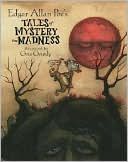
Adding illustrations to Poe does not make it a children's book

Tales of Mystery and Madness
Edgar Allan Poe (illustrated by Gris Grimley)

Do not be fooled by the childlike cover of this brief collection of illustrated short stories, the contents are disturbing! Of course, I would expect nothing less of Poe...

The Black Cat: a loving and innocent house cat drives his owner to ghastly acts of violence.
The Masque of the Red Death: a grim-reaper-esque vistor brings a plague of violent death to a village.
Hop-Frog: a cruelly treated court jester extracts his revenge on the tortuous king.
The Fall of the House of Usher: a hypochondriac man is visited by a childhood friend when his adored sister falls seriously ill.

All of the stories were filled with classic Poe horror and accompanied by gothic drawings to further illustrate the atrocities of the plots. I like Poe - he is sick and twisted and seems to write about the most basal evil that can be found in each of us but we never admit too. Kind of makes you wonder what kind of childhood he had....without really wanting to be told!

The illustrations were well done but I find that I am not a fan of making Poe appealing to juveniles, there is just something poetic about reading Poe in dark black type on the stark white pages. The subject matter is too dark for the drawings that attract pre-teen readers and the drawings would probably prevent an older teenager from picking the book up.

However, as an adult not impeded by the stigma of middle- and high-school societies, the book was a quick and easy read!

Middlesex is the blending of family saga and personal discovery

Middlesex
Jeffrey Eugenides

I pushed this book aside for many years because I wasn't sure I wanted to read a book about a hermaphrodite; I don't know that much about hermaphrodite-ism (is that a word?) and have to honestly admit that I was being judgmental and discriminatory in my original view. Huh, funny how ignorance of a topic brings those qualities out. After so many glowing reviews, I finally decided it was time to read it. Even though this book was a work of fiction, it was extremely eye-opening for me.

The story of Caliope - who changes gender identity to Cal in his teenage years - is a first person narrative that starts with his grandparents in Greece, chronicles their life together as they move to America, switches to narrative about Cal's parents, and finally about Cal himself. More accurately, it chronicles the journey of two recessive versions of 5-Alpha-Reductase on chromosome 5 through three generations of Cal's family until they, unfortunately, come together in his body, making him a male pseudo-hermaphrodite.

What I reflected on most while reading this book was that it could have been a story about anyone, hermaphrodite or not. At it's core, it was a story about an individual who was trying to survive his teenage years, struggling with gender identity and sexuality, and just trying to blend in with the crowd - all themes with which each of us can identify. A theme that was woven throughout the book was that a person's biological sex does not necessarily determine their gender identity, which is an idea I have often discussed, but never thought of in this context.

I also had no idea the many types of hermaphrodite-ism! It is not simply the case of having a vagina and a penis simultaneously, but is a complex (im)balance of hormones and the timing of when those hormones are (or are not) triggered in your body. Which quickly led me to the final lesson I learned from this book: do not simply google "hermaphrodite" in hopes of getting scientific information on the subject. Or, if you do, you should definitely not do it from work! I got a plethora of information, most of it unwanted, that led me to close my browser in record-breaking time! I them carefully navigated to a medicinal science website before conduction that search again!

Overall, a great book and amazing story that gets that extra bump up to 5 stars by changing my view of the world and making me more open to people who are different than me. Ah, I love books that have that effect.

Thursday, September 23, 2010

Which came first: the fall of society or the burning of books?

Fahrenheit 451
Ray Bradbury

***Mild Spoilers***

The concept of Bradbury's opus is quite simple: a dystopian society exists in which books are burned by "firemen" - firemen with hoses that douse everything with kerosene instead of fire-quenching water. Guy Montag is one such fireman; he believes in the unearthing of hidden literature and the burning of entire homes and their contents in order to punish those who broke the law. He traveled through life never questioning these societal rules, until he begins to question why reading is so disastrous and a book, almost magically, find it's way into his hands...then his coat...then his home.

The story itself is not complex, nor are the characters that populate the dystopian society. However, the underlying themes are quite complex and really made me pause to think about the society in which we live. In Fahrenheit 451, the government did not decide to suppress reading and literature by banning books; instead, the government simply responded to the pressure of society to sensor literature that illicited a negative feeling in anyone. In Bradbury's own words re: the story, "every minority...feels it has the will, the right, the duty to douse the kerosene, light the fuse."

This alone didn't initiate the ban on books that turned neighbor on neighbor, brother on sister, and husband on wife. The censorship by minorities combined with society's ever-increasing infatuation and reliance on television, shortened attention spans that demanded instant gratification, and a believe that every individual has the inherent right to be happy every second of the day is what led to loss of free-thought, critical thinking, and literature.

These 165 short pages had me thinking more than a book has made me think in a long time! Written in 1953, it is almost scary how Bradbury created a dystopian society that so closely resembles today's culture. No, we don't burn books but we are encompassing many of the fictional cultural norms that he hypothesized would lead to the obsolescence of books and reading. Many children and adults are more quick to turn on a television show for two hours instead of pick up a book; topics involving minorities (any kind of minority, not only race) can rarely be spoken without some group becoming outraged and demanding censorship, and the controversial topics that do persist seem to be of political mindset; and a sense of entitlement is permeating the younger generations. I'm not claiming to have answers, and I'm not saying that all of society is going to hell in a hand-basket - I'm just illustrating some chilling parallels.

A wonderfully thought-provoking book that will definitely remain with me for some time. The 0.5 star reduction in my rating actually stems for the extra afterword, coda, and interview with the author: in Bradbury's interview, he comes off as kind of a narrow-minded, judgmental person...the exact opposite of what he was attempting to promote in his book!

How far would you go to uncover the biggest discovery in the history of mankind?

The Ice Limit
Douglas Preston & Lincoln Child

How far would you go to uncover the scientific discovery of the century? Perhaps the biggest discovery in the history of mankind?

Sam McFarlane is a renegade scientist - he finds and studies meteorites but refuses to conform to the typical research realm of academia and instead travels the world looking for evidence to support his theory of an interstellar meteorite. He has recently lost face with the scientific community, lost his research partner and best friend, and his marriage ended in divorce. When Palmer Lloyd, the seventh richest man in the world, asks McFarlane to be the chief scientist on an expedition to retrieve a previously undiscovered meteorite in extreme South America - the largest meteorite ever discovered - McFarlane reluctantly agrees. Under the cloak of secrecy, a team of engineering and scientific experts set off on the most dangerous trip of their lives; a trip that leads them to The Ice Limit.

The Ice Limit was action-packed and full of great nerdy science facts, intermixed science fact and fiction, brought in a bit of engineering foresight....and then totally lost me. I'm still not completely sure what happened at the end, am pretty sure that I didn't understand the big reveal about Puppup, and just am not engineering-inclined enough to fully appreciate some of the details. In addition, I have now read several Preston/Child books and while I always enjoy them for what they are - thrillers with a touch of science - I find that they all have a kind of odd flow that doesn't sit well with me.

Overall, a good story with a slightly disappointing ending but the aspects of science kept my attention when it otherwise might have faltered.

Please, slay me. Put me out of my misery.

You Slay Me (Aisling Grey, Guardian: Book 1)
Katie MacAlister

Aisling Grey has been sent to Paris as a courier to deliver a valuable gold dragon statue to a woman; however, when she arrives at the woman's apartment, the woman is found murdered and her statue is stolen - by Drake Vireo. Aisling is now stuck in Paris, the main suspect for murder, and is determined to steal the statue back from the incredibly sexy Drake, who happens to be the powerful leader of the green dragon sept, present at a series of murders but claims his innocence, and is determined to seduce Aisling (you can guess to whether she puts up much of a fight on that one). She is joined by a collection of odd characters including Amelie, a healer; Rene, a taxi driver; and Jim, a demon dog.

This book was just not good, I don't know any other way to state it. The lead character was annoying, her attempts at humor failed miserably and she came off and a rambling idiot; the storyline was convoluted at best and so painfully single-minded that I was begging for a small side storyline; and the supporting characters were all pretty much the same person with a different name. Yeah, the lead male was sexy but other than that had few redeeming characteristics and sexy can only take you so far. Jim was by far the best character, his snarky sense of humor was the only dialogue that got the smallest of smirks from me.

Needless to say, I will not be continuing this series

Sunday, September 12, 2010

An epic saga that is well worth every word on each page

Gone with the Wind
Margaret Mitchell

5 stars + heart + many tears + my undying love

I decided to tackle this intimidating antebellum epic novel this month and patiently spent most of one day making a reading schedule so I could finish it by September 30th. I shouldn't have wasted my time. Instead of trudging from milestone to milestone, I flew through GWTW, devouring every word on each page and becoming completely immersed in the life of Scarlett O'Hara. Without a doubt, this book is one of my top 5 favorites of all time and has made a good case for itself for the #1 position. Many of you probably know the story of Scarlett and Rhett, star-crossed lovers of the South before, during, and after the Civil War, but I had only the faintest idea of the storyline prior to diving in - there was something about a plantation, right? I think my complete lack of knowledge made me love the story because I was constantly being surprised by what came next.

As the story opens, Scarlett O'Hara is the 15 year old daughter of plantation owners in the South. She lives at Tara and is easily the most beautiful young woman in the area...and she knows it. She has every eligible man in the county wrapped around her finger, gets everything she asks for, and carefully keeps her cool even though her temper betrays her Irish roots. Scarlett cares nothing of politics or business, these are men's jobs, but as she has single-minded focus on making the best marriage possible, the rest of the county is abuzz with rumors that the South is succeeding and may go to war against the north in order to protect their way of life...including the owning of slaves.

As war breaks out, Scarlett finds her life completely changed; she spends her time between Tara and (mainly) Atlanta as she struggles to survive and not starve to death in the brutal times. The end of the war brings no relief to her struggles but she finds herself unwillingly responsible for several friends, family members, and servants. In and out of her life is the disreputable Rhett Butler who was banned from the societal life of a gentleman and has made his fortune doing any number of ill-advised jobs. He is obviously completely in love with Scarlett but she is preoccupied with making a living for herself to prove her nay-sayers wrong about her fast ways. As the years after the Civil War progress, Scarlett and Rhett's lives unfold in ways they never foresaw.

Scarlett was a most unlikely heroine whom I alternating between admiring and loathing. She did what she had to do, often with no thought to how her actions affected those around her, and did many things with an apparent lack of conscience. She was mean, manipulative, destructive, and superficially selfish though her actions often benefited many people. I loved her. She made no apologies, did not backtrack, and realized that the conventions of women at that time were too silly for her to worry about following. Ultimately, her bull-headedness was her downfall and during the last 1/4 of the book I wanted to shake her and force her to realize what was right in front of her face.

Rhett was equally as stubborn and manipulative but I admired him for being the one person in Scarlett's life her knew her innermost thoughts and loved her despite them. His mannerisms were perfect for a scoundrel of the time and the whole time that I was half in love with his character, I also realized that he was mishandling the largest event of his life. My surprise favorite character was Melly; she was the polar opposite of Scarlett and, while I first thought she was weak and apprehensible, I quickly realized that she was completely aware of all situations and truly was the most pure and upstanding person in the book - a soft shell of a southern woman with an iron core.

Aside from the engrossing story and complex characters, GWTW provided an interesting background of the Civil War as told from a Southerner's perspective. I am by no means a proponent of slavery, but this provided a view of slave-owning and treatment that greatly varied from the horror stories of abuse and degradation that permeate main-stream media. In the case of this book, and I am completely aware that this is a fictionalized account, the behavior of the Yankees who wanted to free the slaves and provided lip-service to them being equal while treating them with contempt was equally as abhorrent as Scarlett's view that slaves were a lesser people than whites but actually treated many of them with love and respect. As Mitchell tells the story, you question what it was the south was really fighting for.

Whether the theme was love of land, love of a way of live, love of a spouse, or love of self, GWTW encompasses all of these and tells one of the most heart-wrenching and beautiful stories I have ever read.